The Truth About the M6 Series Quantum 2022: Pros, Cons, and Verdict
Category: TVs
Introduction
The M6 Series Quantum 2022 arrived in many markets as a value-oriented 4K television that leans on quantum dot technology to deliver richer colors than conventional LED panels. In a crowded TV marketplace where shoppers balance picture quality, gaming features, smart platform convenience, and price, the M6 Series positions itself as a competitive option for mainstream buyers who want an upgrade from basic LED sets without paying flagship prices.
This article evaluates the M6 Series Quantum 2022 in practical terms: how it performs in everyday viewing scenarios, how it stacks up against similar models, what buyers typically care about, and whether it stands up as a long-term purchase. The assessment focuses on real-world use cases—movie nights, sports, casual and competitive gaming, and living-room daytime viewing—while pointing toward the situations where the set excels and where it falls short.
Detailed Product Review and Analysis
Panel and Color Performance
The core selling point of the M6 Series Quantum 2022 is its quantum dot-enhanced panel. Quantum dots expand the display’s color gamut, producing more saturated and accurate colors at mid to high brightness levels. In practical terms, this translates into more lifelike primaries—reds, greens, and blues—on content mastered for wide color spaces such as HDR10 and some streaming HDR formats.
For most viewers, the M6 delivers a noticeable improvement over standard IPS or VA LED sets in color volume. The advantage is most apparent on colorful HDR scenes—animated films, nature documentaries, and gaming titles with vibrant palettes. Skin tones, however, still depend on factory calibration. Out of the box, many M6 units tend toward slightly boosted saturation; a quick user calibration using the TV’s picture modes or a basic calibration preset will tame that for more natural skin tones.
Contrast, Local Dimming, and HDR
Contrast and local dimming implementation are often the dividing lines between midrange and high-end models. The M6 Series typically employs a full-array local dimming (FALD) or edge-lit local dimming approach depending on screen size and SKU. Where a true FALD solution is present, black level and blooming control improve considerably; where edge-lit dimming is used, contrast is adequate but not class-leading.
HDR performance on the M6 is solid for its class. Peak highlights can look impactful in well-mastered content, and specular highlights—bright reflections, explosions, and HDR sky detail—pop in a living-room environment. The set generally supports the common HDR formats (HDR10 and HLG) and, in some regional variants, additional formats such as HDR10+ or Dolby Vision. Buyers should verify the exact HDR support for their model and region before purchase.
Motion Handling and Sports
Motion clarity on the M6 Series is generally good for sports and fast-paced content. The TV includes motion interpolation and black frame insertion options to reduce blur, and most users will find these features useful for live sports broadcasts. As with many modern TVs, some motion processing introduces a slight unnatural “soap opera” effect; the M6’s presets provide reasonable balance, and many users prefer a light motion smoothing setting or leaving it off for cinematic content.
Gaming Features
Gaming is increasingly a priority for TV buyers. The M6 Series 2022 addresses this with features that matter to console and PC gamers: low input lag, Auto Low Latency Mode (ALLM), and variable refresh rate (VRR) support on higher-end SKUs. For owners of current-generation consoles or gaming PCs, these capabilities deliver responsive gameplay with reduced stutter and tearing.
That said, the availability of HDMI 2.1 bandwidth and advanced gaming features varies by model and screen size. Larger M6 TVs intended as flagship or near-flagship variants are more likely to include HDMI 2.1 ports and higher refresh rate support. Buyers focused on competitive gaming should confirm the exact inputs and specifications for their selected size.
Looking for the best TVs & Home Theater deals on Amazon?
Shop Amazon →Smart TV Platform and Ecosystem
In the 2022 model year, the M6 Series runs a mainstream smart TV platform that supports popular streaming apps, voice assistants, and casting protocols. The platform’s responsiveness and app ecosystem are adequate for the average user; however, high-end platforms still offer smoother navigation and more frequent software updates. For users invested in a particular ecosystem (e.g., Google, Amazon, Apple), it is worth checking which voice assistants and app integrations are native to the M6 in their region.
Audio and Built-In Sound
Built-in speakers on flat-panel TVs are always a compromise. The M6 offers acceptable audio for dialogue and casual TV viewing, with modes that prioritize speech clarity and night-time listening. For movie enthusiasts and those who want immersive sound, a dedicated soundbar or AV receiver remains recommended. The M6 typically includes eARC support on at least one HDMI port, simplifying connection to modern sound systems.
Design, Build Quality, and Ports
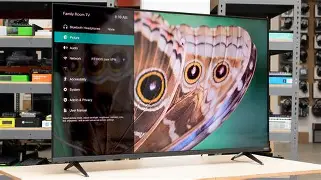
The M6 Series presents a contemporary design—thin bezels and a relatively slim profile—that fits well in most living rooms. Stand design is stable, and VESA mount support is standard for wall installations. Port selection is generally generous for its price band, with multiple HDMI inputs, optical audio out, USB ports, and Ethernet. As noted, the presence of HDMI 2.1 ports is model-dependent.
Real-World Reliability and Software Updates
Long-term reliability depends as much on manufacturer software support as hardware. The M6 Series' 2022 firmware cycle delivered the expected set of bug fixes and app updates for many regions, but the frequency of major OS upgrades varies. Buyers who prioritize longevity should research the brand’s track record for updates and warranty services in their country.
Pros & Cons
- Pros:
- Vibrant color reproduction thanks to quantum dot technology
- Good HDR performance for the price class
- Low input lag and gaming-friendly features on select SKUs
- Contemporary design with solid build quality
- Reasonably feature-rich smart TV platform with common streaming apps
- Cons:
- Contrast and black levels depend heavily on model and dimming implementation
- HDR peak brightness is competitive but not flagship-level
- Smart platform updates and long-term support vary by region
- High-end gaming features (full HDMI 2.1, high refresh rates) not universal across sizes
- Built-in audio is adequate but not immersive for movie enthusiasts
Comparison Table
| Feature | M6 Series Quantum 2022 | Samsung Q80A (2021/2022 class) | TCL 6-Series (R646) | LG NanoCell (2022 class) |
|---|---|---|---|---|
| Panel Technology | Quantum dot-enhanced LED | QLED (quantum dot with VA panel) | QLED with mini-LED (select SKUs) | NanoCell (improved color filters) |
| Color Volume | High | High | High (excellent color and contrast) | Good |
| Contrast & Local Dimming | Medium–High (model-dependent) | High (good local dimming) | High (mini-LED models excel) | Medium |
| HDR Support | HDR10, HLG; Dolby Vision/HDR10+ on some SKUs | HDR10, HLG, HDR10+ (no Dolby Vision) | HDR10, HLG, Dolby Vision (model-dependent) | HDR10, HLG, Dolby Vision (varies) |
| Gaming Features | Low input lag; ALLM/VRR on higher SKUs | Good gaming modes; variable refresh support | Strong gaming focus (HDMI 2.1 on many sizes) | Decent gaming features; HDMI 2.1 limited |
| Smart Platform | Mainstream smart OS with popular apps | Tizen — well-supported with frequent updates | Roku/Google TV — good app coverage | webOS — polished and frequently updated |
| Value Proposition | Very good for midrange buyers | Premium midrange | Excellent value at this segment | Good for users who prioritize gaming and webOS |
Buying Guide: Is the M6 Series Quantum 2022 Right for You?
Buying a TV is a balance between features, room conditions, and intended use. The following guide helps translate the M6 Series Quantum 2022’s strengths and limitations into practical buying decisions.
1. Determine Where the TV Will Live
For bright living rooms with lots of windows, prioritize peak brightness and anti-reflective screen coating. The M6 Series performs well in brighter rooms due to its vibrant color output, but buyers in sun-drenched spaces should choose larger sizes or SKUs with higher brightness ratings to maintain HDR impact.
2. Define Primary Use Cases
If the primary use is movie nights in a dim room, contrast and black level matter most. Pick an M6 SKU with full-array local dimming or consider stepping up to sets with mini-LED backlighting for deeper blacks. For sports and daytime TV, motion handling and color pop (strong points for the M6) are more important.
3. Gamers: Check the Inputs
Console gamers should look for HDMI 2.1 availability, low input lag, and VRR support. While many M6 models include gamer-friendly features, confirm the specific ports and refresh-rate capabilities on the exact model. Competitive gamers will favor smaller to mid-size panels with the fastest response times and confirmed HDMI 2.1 bandwidth.
4. Smart Platform and App Support
Ensure the M6’s smart OS includes the streaming apps and voice-control features weaved into the household ecosystem. If seamless integration with a particular voice assistant, casting service, or smart-home hub matters, check compatibility in advance.
Discover deals on TVs & Home Theater — updated daily.
See Deals →5. Audio Considerations
Plan for a separate audio solution if immersive sound is a priority. The M6’s built-in audio will handle dialogue and casual viewing, but a soundbar will markedly improve movie soundtracks and surround effects.
6. Calibration and Settings
Out of the box, many TVs—including the M6—are tuned for punchy showroom appearance. A few simple adjustments to picture mode, color temperature, and gamma will often produce a more accurate image. For owners who want near-perfect calibration, professional calibration or advanced user calibration tools will yield the best results.
7. Warranty, Support, and Software Updates
Check the manufacturer warranty and local support network. Software update frequency also matters—an active update policy extends the TV’s usable lifetime by improving app compatibility and fixing bugs. Buyers should read recent user reviews and community forum posts to gauge real-world support in their region.
8. Budget and Size Trade-offs
Decide on the largest screen size that fits the room and budget. The M6 Series often delivers its best value in mid-to-large sizes where quantum dot benefits become most visible. If the budget is tight, compare older or smaller models that include similar features at a lower cost.
Real-World Use Cases
To bring the analysis into everyday terms, here are scenarios where the M6 Series shines and where buyers might want to seek alternatives:
- Family movie nights: The M6 is a great choice for families who watch varied content—animated films, blockbusters, and streaming originals—thanks to vivid colors and good HDR highlights.
- Sports fans: Motion handling and color saturation help broadcast sports look lively. Choose a model with strong motion settings for fast-paced viewing.
- Casual and console gamers: The M6 delivers low input lag and useful gaming modes for casual and single-player console play. Competitive gamers should verify HDMI 2.1 and refresh rate capabilities on the chosen SKU.
- Bright living rooms: The TV’s color brightness performs well under ambient light, though true HDR impact will depend on peak luminance of the specific model.
- Home theater purists: Enthusiasts seeking absolute black levels and the deepest contrast may prefer stepping up to mini-LED or OLED options for critical dark-room viewing.
Conclusion
The M6 Series Quantum 2022 is a thoughtfully positioned midrange TV that brings quantum dot color benefits to buyers who want vivid, engaging pictures without paying flagship prices. It succeeds most of the time: colors are lively, smart features are usable, and gaming-support basics are in place for many buyers. Its weaker points—model-dependent contrast performance, variable HDMI 2.1 availability, and middling built-in audio—are important to weigh according to the buyer’s priorities.
For average households that prioritize vibrant picture, streaming app access, and a contemporary design at a reasonable price, the M6 Series Quantum 2022 represents a strong choice. For viewers who demand the deepest blacks, consistent flagship-level HDR, or the absolute latest in gaming bandwidth on every size, a higher-end or more specialized set may be a better fit.
Ultimately, the M6’s value hinges on choosing the right SKU for the intended room and use case and confirming the specific feature set—local dimming type, HDR format support, and HDMI input specifications—before purchase. When selected with care, the M6 Series Quantum 2022 delivers a compelling balance of color, features, and affordability for a wide range of buyers.