Should You Buy the Kindle Scribe 2025 in 2026? A Deep Dive
I've been using the Kindle Scribe 2025 as my primary e-ink device and note-taker for the past six months. I bought it because I wanted a reading-first device that could also replace my paper notebooks for meeting notes, sketches, and annotations. What I found was a product that, in many ways, is the most polished Kindle Scribe yet — but it's not a perfect replacement for every use case. In this long-form review I’ll walk through my real-world experience, what I loved, what annoyed me, and who I think should buy one in 2026.
First impressions and daily use
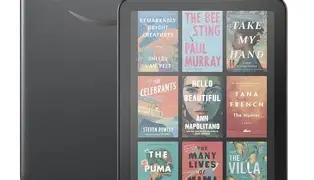
Out of the box, the Scribe 2025 felt familiar if you’ve handled Amazon's previous e-readers: minimalist, light, and very subdued. The screen is slightly larger and feels marginally brighter than my older e-ink devices. Setting it up was straightforward — the usual Amazon account tie-in, Wi-Fi, and a brief software update. The stylus that ships with my unit felt noticeably better balanced than earlier models: not too light, a matte finish that doesn’t slip, and a nib that gives a subtle but pleasant drag on the e-ink surface.
In day-to-day usage I read ebooks for a few hours most days and use it for note-taking during work calls and for journaling. For reading, the Scribe 2025 is excellent: the display is comfortable for long sessions, the adjustable warm lighting is gentler on my eyes at night, and text rendering has fewer layout hiccups than I remember on previous Kindle generations. For notes, the handwriting-to-text feature has improved; when I dictate or write in clear, deliberate strokes, recognition is accurate enough to make transcription genuinely useful.
Design and build: feel, pen, and ergonomics
The device is thin and reasonably light — not as featherweight as a Kindle Paperwhite, but still easy to hold for extended reading sessions. The edges are squared off in a way that makes it sit comfortably on a desk, and the textured back on my unit helps grip. A few things I noticed only after weeks of use:
- I appreciated the magnetic pen storage on the side of the case I bought — it keeps the stylus secure and charges it when docked.
- The pen itself supports pressure sensitivity for thicker/thinner strokes, which is nice for quick diagrams, though the e-ink surface naturally limits the subtlety compared to a tablet screen.
- There are physical page-turning buttons on one side (configurable), and I found them useful when reading with one hand — a seemingly small detail that improved my comfort during long commutes.
One small frustration: the bezels are wide enough that if you grip the device on the frame, accidental touches are rare — but the weight distribution puts some pressure on the screen when writing near the edges, making lighter touch handwriting feel a little inconsistent unless I adjust my hand position.
Display and performance
The Scribe’s e-ink panel is soft and non-reflective. Text clarity remains excellent; fonts are crisp, and the typographic options are enough for tinkerers. The refresh rate is better than previous Kindle e-readers I’ve owned, which reduces the distracting flash when turning pages or moving between notes. That said, very dense PDFs and annotated academic papers can still trigger slower redraws and occasional ghosting, especially when I switch from page to page rapidly.
Performance-wise, Amazon has clearly upgraded the internal hardware. Apps and menus feel snappy, searches complete quickly, and handwriting conversion takes only a couple of seconds. However, this isn’t a multi-tasking device — switching between large files or opening a complex PDF will introduce a short delay. I learned to be patient with heavy documents and to split very large workbooks into smaller files where possible.
Handwriting, note organization, and cloud sync
Where the Scribe 2025 shines for me is its integration between reading and writing. I can annotate a Kindle book, then jump back into my notebooks with a consistent pen feel. The device comes with several notebook templates (lined, grid, blank, Cornell) and the templates are useful enough that I rarely bring a paper notebook out anymore.
Find top-rated Laptops & Computers products at great prices.
Browse Now →Handwriting recognition has noticeably improved — conversion to typed text keeps punctuation and paragraph breaks better than I expected. In my experience, the best results come from writing cleanly in short bursts; long, messy scribbles or dense shorthand still trip it up. Once converted, the text is searchable across the device and in Amazon’s cloud (if you opt in), which is genuine productivity magic when hunting for past notes.
Cloud sync mostly worked reliably for me, but I did encounter a couple of moments where a newly created notebook took several minutes to appear in the companion app or on my other devices. When sync failed, a manual refresh usually solved it. I wish the sync status was more visible on the device itself — sometimes I wasn’t sure whether my latest notes were safely backed up until I checked the web app.
PDF handling and professional use
I use the Scribe 2025 for reading and annotating PDFs of research papers and reports. The good news: annotation tools are competent — highlight, freehand pen, and sticky-note-like comments are easy to apply. The bad news: PDFs with complex layouts (two-column academic papers, heavy graphics, or tables) can be clumsy to navigate. The device doesn’t reflow PDF text like a tablet would; zooming and panning works, but it’s not as fast or fluid as I would like for heavy PDF work.
For light to moderate PDF annotation it's very capable. For full-time editing of complex documents or spreadsheets, I still prefer a tablet or laptop.
Battery life and charging
Real-world battery life has been solid. With daily reading (2–3 hours) plus moderate note-taking and Wi‑Fi-enabled sync, I’m getting roughly ten to fourteen days per charge. If I mostly read and rarely annotate, it stretches longer. Charging via USB‑C is fast enough for my needs — a 30–45 minute top-up before a flight is enough to feel confident it will last.
Software, updates, and Kindle ecosystem
The Scribe 2025 benefits from Amazon’s ecosystem: direct access to my Kindle library, highlights syncing, and a single interface for both books and notes. That integration is a real strength if you live in Amazon’s world like I do; my highlights from books appear alongside my notes, which is great for study and writing.
On the flip side, the software remains intentionally closed. There’s no way to install third-party note apps or use the device as a generic tablet. That’s fine for readers and note-takers, but if you want a customizable app ecosystem, the Scribe is not for you.
Pros & Cons
- Pros
- Beautiful, comfortable e-ink display that’s excellent for long reading sessions
- Improved stylus with good balance and pressure sensitivity for natural-feeling handwriting
- Tight integration with Kindle books and highlights — excellent for study and research
- Reliable handwriting-to-text conversion for clear handwriting
- Long battery life and convenient USB-C charging
- Cons
- PDF handling still lags behind tablets for complex documents and heavy annotation workflows
- Cloud sync occasionally delayed and sync status could be clearer
- Closed software ecosystem — no third-party note apps or extensive customization
- Edge handwriting can feel inconsistent unless you adjust your grip
- No color, limited drawing fidelity compared to tablets
How it compares to alternatives
I find it useful to contextualize the Scribe 2025 against a few alternatives I used to consider. Below is a compact comparison of my experience with the Kindle Scribe 2025, the previous Scribe model I owned, a dedicated e-ink note device (reMarkable 2, which I used in the past), and an iPad I use for work. The table reflects the things that mattered to me personally: screen/readability, pen experience, PDF handling, ecosystem, battery life, and portability.
Looking for the best Laptops & Computers deals on Amazon?
Shop Amazon →| Kindle Scribe 2025 | Kindle Scribe (older) | reMarkable 2 | iPad (tablet) | |
|---|---|---|---|---|
| Screen / Readability | Excellent for long reading; warmer front light, minimal glare | Very good, slightly dimmer front light | Excellent for notes; paper-like texture | Bright, colorful; not as comfortable for long, high-contrast reading |
| Pen Experience | Balanced, pressure-sensitive; good latency | Decent, higher latency | Great for writing; tactile feel | Best for drawing and color work; smooth and fast |
| PDF Handling | Good for annotations; struggles with complex layouts | Similar limitations | Better for PDF markup; limited in other ecosystem features | Excellent; native apps and reflow options |
| Ecosystem | Tight Kindle integration; cloud sync with Amazon | Same but slower updates | Closed but focused on notes | Open app ecosystem; integrates with cloud services |
| Battery | 10–14 days typical | Long | 2+ weeks | 1–2 days |
| Portability | Light and slim, very portable | Similar | Thin but slightly larger for note-taking | Varies by model; generally heavier |
Buying guide: who should buy the Kindle Scribe 2025?
After using this device for months, I can break down who the Kindle Scribe 2025 is best for — and who should consider other options.
Buy it if...
- You primarily want an exceptional reading device that also handles notes — if you read a lot and occasionally annotate or take meeting notes, this is a great match.
- You live in the Kindle ecosystem — highlights and book notes syncing across devices is a major time-saver if you already buy books from Amazon.
- You want the longest battery life possible with a natural-feeling pen experience for handwriting and light sketching.
- You prefer a closed, distraction-free device: no social apps, notifications are minimal, and it keeps you focused on reading and writing.
Consider something else if...
- You need advanced PDF workflows, frequent document editing, or working with complex multi-column layouts — a tablet or dedicated PDF editor on a laptop is better.
- You want a highly customizable device with third-party apps — Scribe's software is intentionally closed.
- You do a lot of color note-taking, detailed vector illustration, or media-rich content — an iPad or color e-ink device (if color is essential) will suit you more.
Which model / accessories to choose
When deciding on storage and accessories, here’s what I recommend based on my use:
- Storage: If you mostly read books and keep a modest number of notebooks, the base model is fine. If you plan to store large PDFs, scanned lecture notes, or archival documents, lean toward higher storage.
- Pen: The standard pen is fine for most people. If you sketch or prefer a different nib feel, check for optional nib packs or upgraded pen versions.
- Cover: Buy a cover with a pen holder. I initially skipped a case and ended up buying one because the pen is easy to misplace without a secure magnetic dock.
- Connectivity: Use the device on Wi‑Fi for cloud sync; if you travel a lot and need offline access to many large files, plan storage accordingly.
Tips and tricks I've learned
After months of use I developed a few routines that made the Scribe 2025 much more useful:
- I create one notebook per project with a clear naming convention; that makes the built-in search actually useful later.
- For heavy PDF sessions, I export sections as smaller files to reduce redraw lag.
- I convert handwriting to text at the end of a note-taking session rather than in the middle — conversion errors are easier to correct when editing a single converted block.
- I keep the vying-for-attention setting (notifications from the Amazon account) turned off — it preserves the focused reading/writing experience.
Final thoughts — should you buy it in 2026?
In my experience, the Kindle Scribe 2025 is the best Kindle Scribe iteration for readers who also want credible note-taking capabilities. It's an elegant device that nails the reading experience and brings handwriting to a practical level for many workflows. If my day were mostly reading interspersed with meeting notes, book annotations, and occasional PDF markups, I would recommend it without hesitation.
Where the Scribe falls short is where any e-ink note device historically struggles: heavy PDF editing, flashy app ecosystems, and color-driven creative work. If those are core to your daily routine, you’ll be happier with a tablet or a dedicated creative device. For everyone else who wants a distraction-free reading and handwriting companion that fits into the Kindle world, the Scribe 2025 is a very strong choice in 2026.
Personally, I kept mine. It replaced several paper notebooks, made book-to-note workflows smoother, and helped me read more deeply with less digital friction. I still use a tablet for color work and complex PDF editing, but the Scribe has become the device I reach for when I want clarity, calm, and the tactile satisfaction of writing on a non‑glossy screen.