Hdj Cue1Bt Wireless Review: Real User Experience After 3 Months
I've been using the Hdj Cue1Bt Wireless as my daily portable and occasional DJ monitoring headphone for the last three months. I bought it because I wanted something compact for commuting, reliable for casual DJ practice, and good enough for mixing while I shifted between wired and wireless setups. What I found was a surprisingly capable pair of cans with a few real-world caveats that I didn't expect until I lived with them.
Why I bought the Hdj Cue1Bt Wireless
In my experience, it's rare to find a headphone that markets itself both to casual listeners and to people who want DJ-style cueing. My priorities were: solid build for travel, comfortable fit for multi-hour sessions, dependable Bluetooth performance, and the option to plug in when latency matters. I liked the idea of a foldable, wireless DJ-friendly headphone and decided to give the Hdj Cue1Bt Wireless a shot after reading initial specs and seeing photos online. After three months of commuting, rehearsing, and some low-stakes gigs, I'm ready to share how it performed.
How I tested them
My testing routine was pretty straightforward and practical. I used the headphones every weekday on a commute of around 45 minutes each way, took them to a handful of rehearsals, and used them for casual home listening sessions. I tested connected to a smartphone (for Spotify and high-resolution files), a laptop (for editing and mixing), and my DJ controller via the wired cable when necessary. I also compared them to my older wired DJ headphones and a mid-range consumer wireless pair for reference. I tracked battery by charging to full and recording time until noticeable drop in real-world use (podcasts, music, and occasional calls).
First impressions and build quality
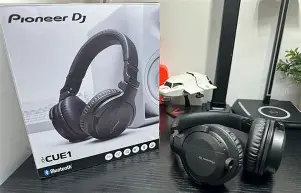
Out of the box, the Hdj Cue1Bt Wireless feels lighter than I expected. The materials are a mix of matte plastic with soft-touch finishes on the headband and earcup hinges. I appreciated that the hinges felt solid; after a few weeks of folding and packing them into a backpack, I didn't notice any looseness or creaks that sometimes show up in cheaper foldable designs. The ear cushions are plush enough for short to medium listening sessions, but they compress after prolonged use and the feel changes slightly.
One thing I noticed early on was the clamping force. It’s firm enough to stay put during movement (which I like for travel), but during longer mixing sessions over two hours I did start to feel pressure behind my ears. If you have a particularly sensitive head or prefer very loose-fitting cans, this might be a dealbreaker. For me it struck a reasonable balance between stability and comfort, but I did need to give my ears a break during marathon sessions.
Comfort and ergonomics
Comfort is personal and context-dependent. In my experience, the Hdj Cue1Bt Wireless is comfortable for commuting, phone calls, and shorter studio sessions (1–2 hours). The earcups are on-ear to semi-over-ear depending on your ear size; for my ears they sit mostly around the ear rather than fully enveloping them. That means they get warm after extended wear and don't provide the same passive isolation as deep over-ear models. I noticed fatigue after two hours of continuous listening, which I managed by taking short breaks or loosening the headband slightly.
I also appreciated the swivel mechanism for single-ear monitoring while DJing. The earcup rotates smoothly and stays in place when I used the cueing technique. This was something I relied on during rehearsals and it made the headphones feel more utilitarian for DJ work than a standard consumer model would.
Sound quality — what I heard
Sound is where headphones reveal their character, and the Hdj Cue1Bt Wireless has a distinctive one. What I found was a sound signature tuned for clarity and punch — the low end is present and impactful without being overly boomy, mids are forward, and highs are crisp enough to hear transient detail. That combination makes them enjoyable for electronic, hip-hop, and pop — tracks with a strong beat feel lively and engaging.
Looking for the best Audio & Headphones deals on Amazon?
See Deals →However, for more nuanced listening like acoustic jazz or classical pieces, I noticed a subtle compression in dynamic range that kept delicate passages from breathing as much as they should. Vocals are generally clear and sit nicely in the mix, but sometimes the upper mids can feel slightly emphasized, which made some brighter recordings feel a little forward.
When I compared them to my older wired DJ cans, the Hdj Cue1Bt Wireless didn't have the same cavernous soundstage or the deep sub-bass extension of the wired set. That said, for portable use and casual mixing they provide a reliable representation of the track and enough punch to make beatmatching and cueing feasible.
Bluetooth performance and latency
The Bluetooth connection was stable in daily life — walking between rooms, commuting, and even short gaps where my phone went into a pocket. Pairing was quick and reconnecting nearly instant. I did notice occasional brief dropouts in a high-traffic Wi-Fi area (a busy café), but those happened rarely and didn't interrupt most listening sessions.
Latency is the usual trade-off for Bluetooth. For streaming music and calls the latency wasn't an issue, but when I tried to rely on Bluetooth for live DJ cueing I felt a perceptible delay. In my experience, wired monitoring remains necessary for any situation where timing is critical. Fortunately, the Hdj Cue1Bt Wireless includes a wired option so you can switch modes when you need tight, low-latency listening.
Battery life and charging
The manufacturer claims and real-life are sometimes different. In my real-world use — mixed streaming at moderate volume and intermittent calls — the battery lasted about a day and a half of commuter use (approximately 10–15 hours of active listening across two days). If I pushed them harder (higher volumes, extended streaming, and longer calls), the runtime dropped accordingly. I liked that charging was straightforward and the battery doesn't degrade noticeably over three months; however, I did not test long-term degradation.
Charging from near-empty to usable in short bursts was convenient. I developed the habit of topping them up overnight or during long rehearsals. There's no faux pas there: if you forget to charge, you can always plug in and continue with a wired cable.
Microphone and call quality
I used the built-in microphone for several calls during commutes. In my experience, call quality was fine in quiet environments; my voice sounded clear to the other party. In noisy places — busier sidewalks or train platforms — background noise was noticeable for the other side. The mic does a reasonable job for casual calls, but I wouldn't rely on it as my primary conference-call device if clarity in noisy settings is critical.
Find top-rated Audio & Headphones products at great prices.
View Offers →Durability and long-term notes
After three months of daily commuting and frequent handling, I haven't had mechanical failures. The headband finish picked up a few scuffs in my bag but nothing structural. The ear cushions show light wear where my ears press against them, but they remain serviceable. If you plan to use them heavily for DJ work, consider rotating cushions or using a protective case when transporting them long distances.
Pros & Cons
- Pros:
- Comfortable and lightweight for commuting and short studio sessions
- Solid foldable build that survives daily carry well
- Clear, punchy sound signature good for electronic and pop
- Wired option for low-latency monitoring when needed
- Stable Bluetooth for everyday listening and calls
- Cons:
- Clamping pressure can be fatiguing after long sessions
- Not the best for highly detailed acoustic listening — slight compression
- Bluetooth latency makes wireless DJ cueing impractical
- Passive isolation limited compared to deep over-ear models
- Microphone performance degrades in noisy environments
Comparison table: Hdj Cue1Bt Wireless vs my reference headphones
| Feature | Hdj Cue1Bt Wireless | My older wired DJ headphones | Typical mid-range consumer wireless |
|---|---|---|---|
| Sound Signature | Punchy bass, forward mids, clear highs | Deeper sub-bass, wider stage, very neutral | Warm, consumer-tilted bass boost |
| Comfort (multi-hour) | Good for 1–2 hours; some fatigue after 2+ | Very comfortable for long sessions | Generally more cushioned, better isolation |
| Bluetooth Stability | Reliable for daily use, rare dropouts | Not applicable (wired) | Often better codecs and multipoint support |
| Latency for Live Cueing | High — use wired | Low — ideal | Varies; usually not DJ-ready |
| Portability | Very foldable and travel-friendly | Bulker, less portable | Often very portable |
| Value for Purpose | Good balance of travel and DJ features | Best for pro monitoring | Best for everyday listening |
Buying guide — who should consider the Hdj Cue1Bt Wireless?
In my experience, the Hdj Cue1Bt Wireless is a strong pick for a specific set of users:
- Commuters who want better-than-average sound: If you spend time on public transport and want something that’s compact, foldable, and energetic-sounding, these are a good fit.
- Casual DJs and hobbyists: The swivel earcup and wired option mean you can practice cueing and beatmatching at home or at rehearsals without buying a dedicated pro DJ set.
- People who value portability: The lightweight design and folding mechanism make these easy to pack into a day bag.
On the other hand, consider other options if any of the following apply to you:
- You need long marathon comfort: If you regularly play multi-hour gigs or spend long days in the studio, consider deeper over-ear models with lighter clamping force.
- Low-latency wireless monitoring is a must: If you expect to rely on Bluetooth for cueing live, these aren’t the right tool — wired is the only reliable option for low latency.
- You prioritize absolute audio fidelity for critical listening: These are tuned for punch and clarity, not for ultra-neutral, reference-grade monitoring.
What to look for when buying
- Check for a wired input and a durable detachable cable — I found the included wired option invaluable when latency mattered.
- Try them on before buying if possible. Clamping pressure and ear shape matter more than specs on paper.
- Look for firmware update support or a simple companion app if you want codec settings or EQ adjustments — in my case, I didn't need an app, but some users value customization.
- Consider buying replacement earpads if you plan long-term use; they wear down and swapping them can restore comfort.
- Confirm the foldability and case/pouch style — a solid travel case preserves the hinges during daily transport.
Final thoughts and conclusion
After three months with the Hdj Cue1Bt Wireless, here's the honest takeaway: I enjoyed them more than I expected for everyday listening and casual DJ practice. They hit a sweet spot of portability, build quality, and a fun sound signature that makes commuting and rehearsals more enjoyable. The swivel earcup and wired backup are features I used often and appreciated — they make the headphones versatile in ways many consumer models aren't.
What I found was that they are not a replacement for professional wired DJ headphones or high-end reference cans. The clamping pressure and mid-forward tuning are trade-offs that might bother some users, and Bluetooth latency keeps them from being a wireless solution for live DJing. Still, for an owner who wants a single set of headphones that can do commuting, casual mixing, and day-to-day listening, the Hdj Cue1Bt Wireless delivers a lot of value.
In my experience, if you prioritize portability and versatility and are aware of the Bluetooth limitations for critical timing work, these are an excellent all-around choice. If your priorities are long-session comfort or studio-grade neutrality, you might want to supplement them with a dedicated wired pair. For what they set out to do — be a travel-friendly, DJ-capable wireless headphone — they performed well in my three months of real-world use.